
It Feels Too Good to Be True
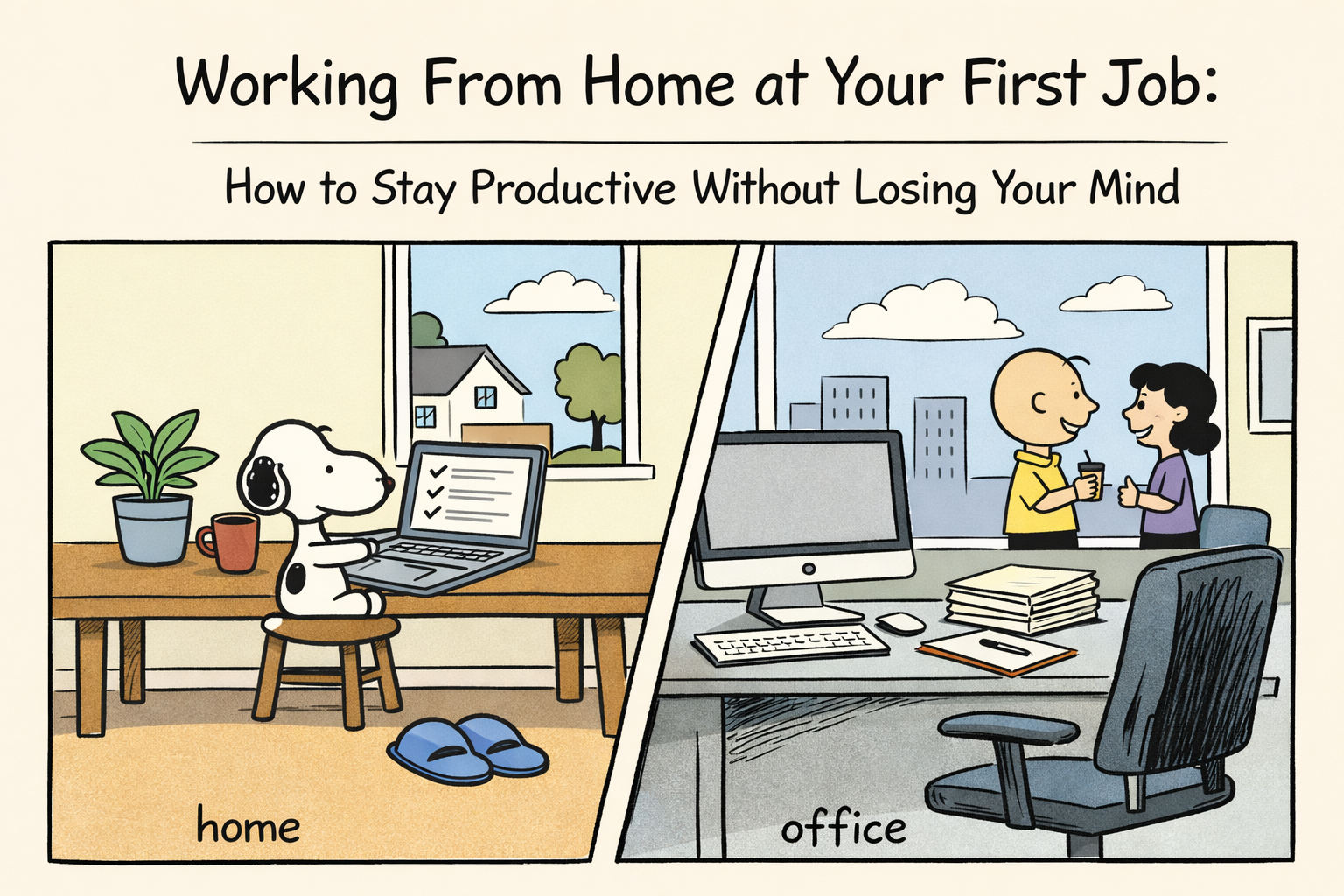
When you land that first job and hear that you can work from home, it sounds like a dream come true. More sleep. No dress code. No commute. Access to all the luxuries of your home space. How can it get better?
It is reported for 2026 that 52% of U.S. remote-capable employees work in a part office/part from-home arrangement (hybrid). Meanwhile, 26% of employees work exclusively from home. Safe to say, this work model isn’t really going anywhere anytime soon.
Working from home allows you to have more time back that you would normally spending on getting ready to go to the office. This can be up to 3 hours depending on how long of a commute you have and other factors. This extra time can help you actually finish that laundry that never gets done. Or allots you 30min to workout during your lunch. Or whatever really!
As ideal as it sounds, working from home only works based on an innate trust system in place and reports of you actually being productive during this time. If there is any question about what work you are completing during the day, the remote worker is the first person to be closer watched (ironically enough), and be terminated.
How to Work From Home at Your First Job
I typically am a steady presence in my company’s local office. However, I was forced to be fully engulfed in the work from home system after having foot surgery. In the 6 weeks I became a full-time remote worker, I’ve picked up on some crucial strategies to implement in order to stay productive—all while enjoying the flexibility that working from home allows.
Here’s a quick rundown, before I break them down:
- Creating a physical work space
- Overcommunicate with your team
- Double down on structure
- Don’t let your world shrink
- Do exceptional work

1. Creating a Physical Work Space
For the majority of us, our first few places we live in have restrictions—studio or one-bedroom, roommates, etc. So with that, there are only about two rooms where we do everything. That includes sleeping, eating, watching TV, and now we’re also adding working.
Since you are not working in the office, your brain needs a place to signal “hey, I am in work mode.“
After I first got my foot surgery, I found it easier to sleep on my couch for a couple weeks in order to support the foot. It worked great for that purpose. However, even though I’m back to sleeping in my regular bed, I’ve noticed I start getting tired while I’m on the couch now. Like ready to fall asleep now kind of tired.
Why is that? Because my brain now has the connection of being on the couch with going to sleep.
So with that being said, try to have a dedicated space to work in:
- Have it outside of your bedroom, if you can
- Have it near some windows to get some light in
- Have a dedicated work chair; not the couch, not a beanbag chair
- Have a separate monitor, mouse, and keyboard set up, if provided/needed
The other biggest thing, that I have the hardest time with, is eliminating distractions within an eye’s sight. Not an arm’s length, not just in another room where it’s still visible. Completely out of sight.
Even if it was far away, I noticed I’d pass my guitar and start playing it. Or be itching to pick it up.
A lot of times, this includes my phone. We all know how easy it is to pick up that thing and blow 20 minutes like it was a dandelion. Put it on DND and hide it under a pillow.
2. Overcommunicate With Your Team
I feel like the phrase “the squeaky wheel gets the oil” often holds true when it comes to work and getting noticed by higher-ups. And one of the huge benefits of being in the office is that your face is seen, your voice is heard, and your presence is felt. If you’re looking to get promoted, these are all huge things you need on your side.
Naturally, when you are out of the office and working from home, these things are much harder to establish. You need to make it a point to do so.
Sure, this first and foremost applies to work related conversations.
- Give updates on what you are working on and when it will be done
- Ask questions early on, not just when you get totally stuck
- Clarify when things are not clear
- Reply in a timely manner
- Be active in meetings and allows have something to say
But also, work is our main point of friendly, social interactions in post-grad life, so don’t forget to establish that line of communication.
- General small talk (ie. how was your weekend?)
- Learn what your coworkers are into and get excited about outside of work
- Ask to hop on a 15-minute call to simply ‘catch up’
You can use the same strategies I discussed in this blog post if you need help. Don’t skimp on this side. Spending a little time making connections with the people you work with are beneficial for your wellbeing and company standing. And it sure beats scrolling Instagram.
3. Double Down on Structure
One of the best parts of working from home is the lack of micromanagement peering over your shoulders at all times. However, sometimes this pressure is exactly what tidies us up. How do I stay on track?
The answer is to double down on creating structure of your own.
As tempting as it may be, and sometimes you do what you gotta do, but try to have a normal morning routine where you are doing more than simply waking up and hopping on your laptop (read this blog post to help with your morning routine).
Wake up at a decent hour. Get some exercise. Take a shower and put on some clean clothes (you can keep them casual, but avoid wearing your pajamas). Enjoy that time in the morning to sip your coffee, get your social media fix out of the way, and mentally prepare to start on schedule.
Now that you have everything in order to start the day, now it’s time to stay structured during your work day.
Obviously, everyone’s job is different, but a general idea of a schedule could look something like this:
Morning
– Highest attention and most brain-involved tasks
– Front load most of the productive work for the day
Midday
– Communications and collaboration
– Lunch and midday break-up activity (short walk, sit in the sun, social interaction, etc.)
Afternoon
– Wrap up loose ends from the day
– Come up with “to-do” list for tomorrow’s agenda
You don’t need a rigid schedule, but having intentional blocks of focus prevents the day from drifting.
4. Don’t Let Your World Shrink
This is something that I deeply struggle with and the reason I’m always so opposed to working from home.
When you work from home, you are essentially replacing the number one place you spend most of your day (the office) with the number two place you spend most of your day. All of a sudden, you have 80% (at least) of your time being spent in one space. And that’s where you start to lose your mind.
Since you are spending so much of your time in your home base, make it a point to get out of it as much as you possibly can. Go and work from a coffee shop or library every once in a while if your kind of work makes sense to do so. Go take a long walk or sit in a park after work to decompress the mind a bit.
The other element to this is the social aspect. There’s a huge difference between virtual interactions and in-person interactions. And as we learned from the Covid era, those virtual interactions are not equal. If we are by ourselves all day, you start to lose any comfortability or momentum with being social.
Try to join a rec sports league if you’re the active type. Meet existing friends after work for a drink or bite (plenty of great happy-hour options). Or at the very least, make it a point to do something on the weekends that involves socializing (how about a dinner party?). You need to have things set up to look forward to, and if you don’t look forward to, force you out of your comfort zone.
When your world wants to shrink, try to make the effort to expand.
5. Do Exceptional Work
This point probably could go first, but all of these other things to say you need to be that much better at the job you have at hand. Like I said in the introduction to this post, when work isn’t getting done, the remote employees are the first people companies tend to terminate.
There needs to be a heavy amount of trust and creditability you have to develop with your team and boss. Every time they reach out, you can’t be MIA. You can’t be behind on tasks that need to be complete. You can’t fall from deadlines.
As I said in the communication point, being in an office setting is easier to get seen and recognized, purely from a face-pattern match system. In order to be considered for those same promotions, pay raises, and opportunities, you need to make sure your performance is that much better.
At the end of the day, hiring for a company is all about the trade balance. Every employee starts off as a liability to the company (value they provide is less than what they are being paid). At some point, ideally, they convert to an asset where that value-pay model is flipped.
By being remote, the company feels like they are providing you more in that sense so the steepness of value for the asset threshold is increased. It’s your job to exceed those expectations, and prove your value as early as possible. Don’t give them any reason to blame the work from home format for a performance inhibiter.
Conclusion: You Get Back Time—Don’t Waste It
Your first job sets the tone for your career. Working from home can either slow that momentum down or accelerate it. When done right, working from home gives you something incredibly valuable:
Time.
It is so important that you get to use this time in a way that best suits you and your well being. Use that time to:
- Make memories with friends
- Check in on your family
- Work on a passion project
- Build healthy habits
It’s not about taking advantage of it; it’s about using it as productivity leveraging tool. And the key to having a solid work-from-home foundation is simple, but important.
Create a separate work-space without distractions. Over communicate with your team. Double down on your daily/weekly structure. Expand your life outside of work to balance any shrinkage. Finally, continue to do high-level work that gets noticed and ensures your flexibility.
I will say, as one last thing, I highly recommend AGAINST working from home as much as possible. Especially early on in your career and especially when you move to a new city. There’s a high level of danger in the extreme comfort it provides. So always be weary of that and try to grow your horizons as much as possible.
But if you’re going to, be sure to follow some of these tips…
Including, but not limited to, keep writing your story.
—Will


Leave a Reply