
First Step: Get the Job (check)
You recently got hired? That is awesome news. That deserves a big congratulations, because in today’s job market, it’s not an easy thing to do.
Whether it’s tomorrow morning, or 4 months from now, you’re going to have a first day at this job, and you’re going to be required to wear clothes on this first day (I think I can safely assume).
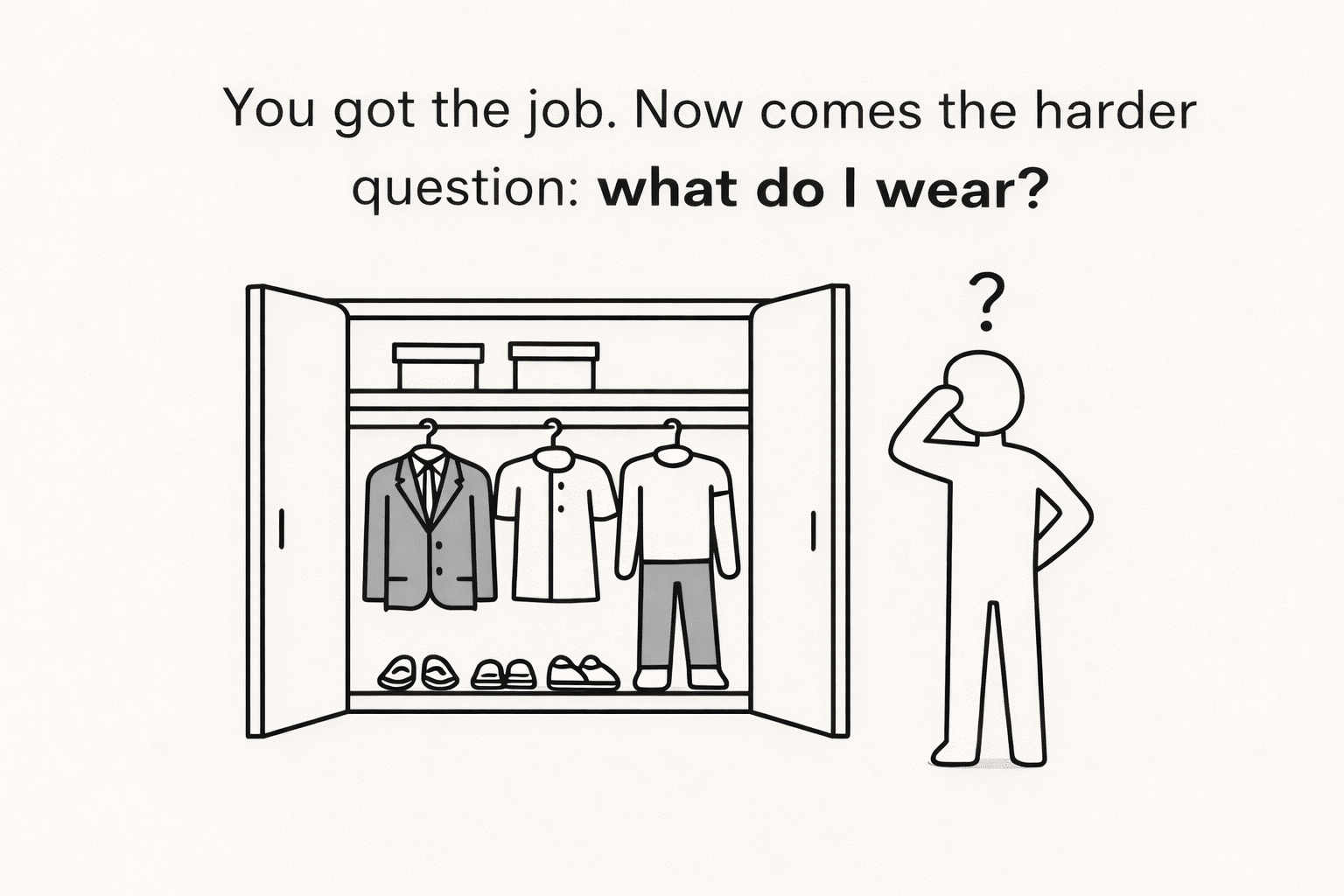
But what do I wear?
That was an exact thought I had right before starting my job. You worry so much about actually securing the job, that this part often gets pushed under the rug. And things under a rug cause lumps…you may have just tripped over that lump.
And it’s not like in a “picking out the perfect outfit” kind of way, but more so what is appropriate in this specific office setting. On one hand you don’t want to be underdressed and come off unprofessional. On the other hand, you don’t want to be overdressed and stick out like a sore thumb. After all, first impressions do matter.
Well, have no fear. This post will break down everything you need to know to rock that first day outfit with confidence, style, and dignity—so you can knock those orientation trainings out like a pimp.
Decoding the Office Dress Code Before You Get There
There are some basic general dress codes that lay out specific “rules” on how you should dress, so let’s go over those.
- Business Formal
- Business Professional
- Business Casual
- Casual or Smart Casual
Business Formal
Business formal is becoming increasingly less and less but still may be relevant to you. Some industries that still require business formal attire include:

- Law Firms
- Finance & Banking
- Government
- Public Relations
The goal here is polished, traditional, and conservative. You’re dressing to signal professionalism and authority. What this might look like:
Men
- Dark, well-fitted suits (navy, charcoal grey, or black)
- Tailored, plain button-up shirt (white or light blue, no collar buttons)
- Tie (simple patterns or solid color)
- Leather dress shoes (brown, black, or oxblood oxfords)
- Dress belt (match leather of shoes)
Avoid: Loud and/or clashing patterns, light colors aside from shirt
Some Places to Shop (not sponsored):
- SuitSupply – https://suitsupply.com
- Brooks Brothers – https://www.brooksbrothers.com
- J.Crew (suits & dress shirts) – https://www.jcrew.com
- Banana Republic – https://bananarepublic.gap.com
Women
- Tailored suit (pantsuit or skirt suit)
- Structured blouse or top
- Closed-toe heels or professional flats
- Minimal jewelry
Avoid: short skirts, open-toe shoes, loud accessories
Some Places to Shop (not sponsored):
- Ann Taylor – https://www.anntaylor.com
- Theory – https://www.theory.com
- Banana Republic – https://bananarepublic.gap.com
- MM.LaFleur – https://mmlafleur.com
Business Professional
A little more flexibility than business formal, but still overall pretty conservative. You might see this in the case for similar industries, but maybe smaller in size or more relaxed atmosphere.
Men
- Matching suits or even different color pants and jacket (can introduce some patterns and lighter colors like grey or tan)
- Tailored, plain button-up shirt (white or light blue are safe bets, but can also add in some stripes or dots)
- Tie (might be optional)
- Leather dress shoes (similar colors, but can scope increases for shoe style)
- Belt (again, match leather of shoes)
Some Places to Shop (not sponsored):
- Nordstrom – https://www.nordstrom.com
- Charles Tyrwhitt (shirts) – https://www.ctshirts.com
Women
- Blazer + trousers (can either match or be different colors) or midi skirt
- Blouse, knit top, or professional shell (neutral color palette, some slight patterns)
- Heels or flats
- Simple jewelry
Some Places to Shop (not sponsored):
- J.Crew – https://www.jcrew.com
- Nordstrom – https://www.nordstrom.com
- Aritzia – https://www.aritzia.com
Business Casual
This is probably the most common and what I adhere to 97% of work days. In no way does this mean “casual”, but definitely not a suit. Think polished but relaxed, professional without being stiff, intentional but not trendy. Have a little more fun here and introduce some patterns and colors that show your personality.
Here are some examples of business casual attire:
Men
- Dress pants or chinos
- Dress shirts or polos (either button-up or button-down)
- Formal sweaters (I wear them over dress shirts)
- Loafers or clean leather sneakers
- Optional blazer (probably not necessary for entry-level roles, but could still be in play)
Avoid: jeans (for the most part), graphic tees, athletic shoes
Some Places to Shop (not sponsored):
- Uniqlo – https://www.uniqlo.com
- Banana Republic Factory – https://bananarepublicfactory.gapfactory.com
- J.Crew Factory – https://factory.jcrew.com
- Target – https://www.target.com
Women
- Ankle pants or midi skirt
- Blouse, knit top, or sweater
- Flats, loafers, or clean sneakers
- Cardigan or light blazer
Avoid: crop tops, overly casual sandals, clubwear
Some Places to Shop (not sponsored):
- Uniqlo – https://www.uniqlo.com
- Old Navy – https://oldnavy.gap.com
- Loft Outlet – https://www.loft.com/loft-outlet
- H&M (for basics only) – https://www.hm.com
Casual/Smart Casual
Casual or smart casual is a modern guideline becoming increasingly popular, especially amongst tech or creative firms. You can definitely bring a lot of personality in this space, but do so in a clean and put-together manner.
This could look like:
Men
- Chinos or dark wash denim
- Clean polo, plain dark t-shirt, or casual button-down
- Casual sweaters
- Clean sneakers, loafers, or boots
Avoid: gym clothes, flip-flops
Some Places to Shop (not sponsored):
- Everlane – https://www.everlane.com
- Abercrombie – https://www.abercrombie.com
- COS – https://www.cos.com
Women
- Dark jeans, tailored pants, or a casual dress
- Stylish top or sweater
- Sneakers, boots, or flats
- Minimal accessories
Avoid: pajamas-in-disguise, overly distressed denim
Some Places to Shop (not sponsored):
- Everlane – https://www.everlane.com
- Abercrombie – https://www.abercrombie.com
- Madewell – https://www.madewell.com
How to Actually Know What the Dress Code Is
So know what you know what the possible dress codes are, it’s time to find out which one your soon-to-be office operates under.
Now ideally, you have a contact at the company that you can reach out to and they can let you know. This can either be the recruiter, or the person that hired you on, or your boss, or someone else that works at the firm. I know my boss gave me his personal number when he told me I was hired and made me feel really comfortable to reach out to him with anything.
If this is not the case for you, or maybe this really is a last minute effort, here are some more creative ways to figure this out.
1. Stalk LinkedIn Posts
Go to your company’s LinkedIn page, and see what they go going on. You might need to scroll through a bunch of corporate filler, but there should be some photos somewhere. Some of these photos are going to be special events, maybe conferences, or whatever, but see what you can find.
Maybe there were some in-office activities where photos had been taken and posted. This might not be a perfect representation, but should give you a better idea than nothing at all.

2. Google Images
Similarly enough, if you type into Google “[insert company name] offices”, then search images, a lot will pop up (will differ depending on how large the company is).
Again, this may not be perfect, but you can either see a real photo of the office in action. Or, at the very least, there might be some corporate stock images used. Yes, they’re just models in the photos, but typically companies will use stock images with people that are dressed within their own dress culture.
The stock images I saw for my company, for example, included very business casually dressed individuals—chinos, sweaters, patterned shirts, etc. It’ll give you a clue.
3. Glassdoor (or Similar Site) Reviews
Most decently-sized firms will have a lot relevant information on Glassdoor.com if you hadn’t already checked it out.
Reviews from anonymous people provide a lot of great insight, yes on dress code included, but also as far as salary, culture, and overall experiences. Try to sift through those reviews that do mention dress code and culture (a lot of the times they correlate in a pretty direct way).
4. Think Back
I know it seems obvious, but a lot of obvious things get throw out of the window when the nerves of the first job hit.
Before taking this job, did you visit the office prior? What was the person(s) that interviewed you wearing? Did they say anything that would give an idea to office dress policy?
You’d be surprised to realize how powerful your mind subconsciously picks up details, even during a stressful interview process. Intentionally think back, and then maybe you can confirm with LinkedIn or the Google Images search methods mentioned. Worse case scenario, you rely on your gut and memory.
Some General ‘Rules of Thumb’
Here are some random thoughts to keep in mind, no matter your job title, budget, or dress code.
- When in doubt, always try to dress a step above what is expected. Dressing to impress on that first day sets the tone and makes you instantly noticed.
- I remember hearing this a while ago; there’s a difference between being uncomfortable and being unfamiliar with what you’re wearing. If you aren’t used to wearing more formal attire, practice in the comfort of your own home before rocking it on your first day. It might sound a little silly, but this practice can help the unfamiliar become familiar.
- With that, wear your favorite/go-to outfit that fits the dress code. You know how it wears, you know how it feels, and nobody has seen you wear it before. You’ll be sure to have the perfect balance of comfort and confidence.
- Buy an iron or steamer and use it. Don’t wear wrinkled clothes—that’s a bad look.
- This goes without saying, but make sure your clothes are clean. Whether that means planning ahead and scheduling dry cleaning, or run your wash cycle the night before. Either way, clean clothes only.
- Personal grooming is just as important, if not more important than what you wear. Brush your hair, trim your beard (if applicable), brush your teeth, use deodorant, etc.
Conclusion: Don’t Start at Zero
All in all, there are a lot of moving parts when it comes to that first job (or even second or third or fourth job for that matter). I totally get it, because I was there too. The important thing is you actually did think of it before it was too late.
Remember: first impressions are superficial, second impressions reveal your true self. With that, don’t start at zero and rely on your other skillsets to raise your stock from the bottom. Instead, leverage this to start from a high point and then push from there.
And worst case scenario, you botch up that first day and you show back up the next day making the necessary adjustments. Again, you most likely are just going to be filling out forms and completing orientation videos (sorry for spoilers).

So enjoy that first day as best as you can. You only get one.
Until then, keep wearing your outfit… I mean keep writing your story.
—Will

Leave a Reply