My Guess is You Probably Don’t Read [Anymore]
I saw a statistic that 42% of adults don’t pick up a book after graduating college. And for those who do, the average American reader is consuming 12 books per year. Plop that data up on a time chart and I bet that number has been dwindling year after year after year since God knows when.
I am the first to admit, I don’t read as often as I should and have a hard time staying focused while reading (thanks short-form content).
Why?
It takes me a while and I get bored. Hell, reading ain’t important anyways…right?
Right?
My Run-In With a Former Drug Dealer
Speaking of books, here’s a personal story that gets me thinking every once in a while:

After being a long-term Android user, I finally made the switch to an iPhone prior to entering college. After purchasing the unlocked phone online, I went to the T-Mobile store to get it all set up.
I was customer in the store and there was only one employee working there, a slim guy with glasses. He started the activation process and there was some downtime as we waited.
Now I’m not sure exactly what launched this discussion, but next thing I knew, he was telling me about how he went to prison after he got caught selling drugs (I didn’t ask what kind). He told me they seized his assets, took all of his money, and was now on the straight and arrow.
I may have asked him what it was like in prison, and he started getting deep into what he learned. He told me the people in there are in fact criminals, but they opened his mind to a new world of thought. They led him down a scary but liberating path—a path of reading books.
Certain books, he explained, documented and exposed inconvenient truths about world order and power. Books are as old as language itself and if we believe that all of the truth is accessible in an internet system that is younger than the invention of the very iPhone that brought me to this store in the first place, then we are but naive and foolish followers.
He continued by saying how Amazon and other internet-based book stores can push what information they do and don’t want to be discovered, simply by promoting certain books, and shadow-banning others. Those in search of actual answers can still find the ones that aren’t in the limelight.
T-Mobile employee #7294 (more commonly known as “Greg”) was one of those “answer-seekers”. He zipped open his backpack. I gulped and wiped the sweat off my brow.
His hands emerged from the canvas bag with a stack of books. Hundreds of sticky notes, page tabs, and ink scribblings filled the pages. I don’t remember what any of the books were and didn’t press to ask what they were about, but I knew that he was a firm believer in what he was saying.
Granted, the guy didn’t even know how to turn off the phone to do a restart, but he seemed a little more occupied on his life outside of work. I eventually left, with much more than just a functioning iPhone X in hand.
The Point of All of That
Now, good chance the guy was just a bit of a nut, and who knows if any of that tale he told was reality. But he did make a couple good points.
There are millions of books in existence and majority of them were written before the internet was invented.
- Books we know about that we can access and read
- Books we know about that we can access but not read
- Books we know about that we can’t access nor read
- Books we don’t even know about
Even though there are tons of books, we probably only hear the same common things from all of them. Is that on purpose or is that all they possess? Maybe there is new and, potentially, disturbing information hidden in some of these books, and we have no idea that information is out there for us to consume.
On the more practical and less tinfoil hat-wearing side of things, maybe there are just nuggets of forgotten life anecdotes that can help us in our daily practices.
Bits on thinking, bits on growing, bits on traveling, bits on loving, bits on being happy; all of those answers that we desperately strive for might be hidden at our local libraries, and we just don’t realize it.
I digress…
5 Favorite Reads of Mine and How They Help in Post-Grad Life
Some of these you might be familiar with, some you may not. Either way, there are tremendous takeaways from all of them. In no particular order:
1. How to Win Friends and Influence People — Dale Carnegie
What’s its Deal
If you look at similar lists, this one is probably in there and is probably also one of the most popular business/sales books that has ever been written. There’s a reason it is so popular.
In this timeless classic, Carnegie breaks down practical uses of human psychology in order to better create new relationships and further advance old ones. He lays out simple principles like remembering names, showing genuine interest, avoiding unnecessary criticism, and making others feel important, and ties them to stories in real life examples.
How it Helps in Post-Grad Life
As you may have figured out in college or not, the world lives and breathes on interpersonal relationships. I’m sure you’ve had experiences with professors that might have loved you, or might have hated you. The truth of the matter is if you can learn how to make people feel heard, valued, and understood, doors open (you may have gotten a B instead of a C+ in intro chemistry or whatever).

This book grows with you, allowing you to use the same ideas at your entry-level spot, as you might do if you were manager or higher. It helps to navigate bosses, coworkers, and clients like a seasoned pro.
And outside of a work setting, these practices are still golden. Use it for making friends, or getting dates. It’s not about manipulation—it’s about understanding what people naturally respond to.
My Favorite Takeaway
Remembering names is super important, and you should take pride in doing so. Doing so for everyone you meet, not just the people you “care” to remember. As Carnegie puts it, there is no greater word in the English language than someone’s own name.

2. A Dream About Lightning Bugs — Ben Folds
What’s its Deal
This is the memoirs of singer-songwriter and nerdy grunge piano legend Ben Folds, who tells his story all the way from his earliest memory (spoiler alert: having a dream about lightning bugs) up until the current day. Ben Folds is a pretty interesting character as you find out, balancing early emerges of protege status mixed with a lifelong stubbornness and jackass attitude. He definitely didn’t take a linear path to get to the level of success that he did, but he got there his way. And of course, it is very funny and reflective.
How it Helps in Post-Grad Life
If there is one thing that this book shows is that it is never too late to make it. Ben played some piano as a kid, but focused primarily on drums to the point where he had a percussion scholarship to a top 5 music program in the United States. Right when you think he’s set, something sets him back. And I mean way back.
Or is it really way back? That’s always the question we are asking when it comes to making progress. Folds went “backwards” so many times throughout his telling of his life, but somehow the puzzle pieces lined up to ultimately find success beginning in his late 20s (his “peak” didn’t even occur until later on).
How someone can take so many gut punching blows and be able to be in a position to even write this book is a miracle of its own. But it’s also calming and helps me realize that struggles are always going to occur. There is always a path to achievement. Whether it is being forced to drop out of college (he did), or getting divorced 4 times (he did), or drop his debut album on the worst day in modern history (he did), light came out of the other side.
My Favorite Takeaway
When looking for a singer for his band, he had people auditioning but nobody seemed to be the fit he wanted. He had wrote the songs and lyrics and wanted to have his work in good hands. After a lot of running around, Ben decided that he was going to sing them, because, although he might not be the greatest singer, his voice was authentic and connected to the music being made.
Sometimes we search around so much for the perfect thing, but never simply think to ourselves to be the one to do the job at hand. This trust in himself led the band to glowing success.
3. Grit — Angela Duckworth
What’s its Deal
This is another one of those classic “gift-reads” where your Aunt Shirley saw it at Barnes and Noble and decided in would be in your best interest to give it a skim or two. Well, Aunt Shirley was in fact right.
I know this is all supposed to be anti-guru stuff but some data backed science won’t hurt you. Throughout the book, Duckworth studies high performers across industries and finds one common trait: perseverance paired with passion (aka grit). It’s not about the short-term wins or losses, but the continuation of chasing your greater purpose no matter what comes up. She points out that having grit is one of the best possible attributes you can possess and it is something that can be developed.
How it Helps in Post-Grad Life
One of the biggest philosophical tribulations of the post-grad era is the realization that the incremented structure you had throughout your years in school is gone. Now you have to live “life”, from age 22 up until whenever you die. If you don’t find a way to keep going, you’re either going to spiral or not live a life that you want.

This book frames this internal tension as part of the process and get’s you on the steps of progress, whether you are being recognized or rewarded for those efforts. Regardless, it is the long-term sustainability that you are after and if things don’t feel great right now, that’s totally fine. Real progress is slow and often invisible.
My Favorite Takeaway
Duckworth tells the parable of the 3 bricklayers:
Someone goes up to the first bricklayer and asks, “What are you doing?”
The first one responds with something like, “I am laying bricks.”
Then they go up to the second bricklayer and ask, “What are you doing?”
The second one responds saying, “I am building a church.”
Finally, they approach the third bricklayer and ask, “What are you doing?”
The third says, “I am building the house of God.”
This isn’t intended to be a religious story. Instead, a story about finding purpose in the work you do. All three bricklayers are physically doing the same exact task. However, the difference is in how they view what they are doing. And news flash, that third bricklayer is going to be able to keep going a lot further with a lot more sanity than the other two.

4. Humor, Seriously — Jennifer Aaker & Naomi Bagdonas
What’s its Deal
Humor is much deeper than getting a few chuckles—it becomes a strategic advancement for those who can wield its ever-so-powerful wrath. This book breaks down how you can use humor in the right places of “serious” life to build trust, diffuse tension, strengthen leadership, and make you more memorable.
Being funny is a bit of an art and a skill. It’s much more than just being the class-clown in the back of the room, and in fact, can create a greater sense of professionalism than you could ever imagine (sounds counterintuitive, I know). From workplace interactions, to hosting client meetings, to sending emails, there are moments for levity that you are missing out on.
How it Helps in Post-Grad Life
I feel like life gets so serious all of a sudden and we need to be on our best behavior at all times. Sure, there are things that require a solemn, stoic state of mind, but that doesn’t mean that you shouldn’t be able to do a good chunk of it with a smile.
This book helps to remind us that rigidness doesn’t have to be a byproduct of credibility. The ability to bring warmth and levity into a room makes you more approachable, more human, and often more influential. At the end of the day, we are all just humans roaming this planet together, so why does it change so much when it’s bundled in a dress shirt and a pair of slacks?
It’s a powerful tool when done right, especially early on in your career.
My Favorite Takeaway
You shouldn’t look to make jokes at other people’s expense in general… but it does lay out a rule of never to “punch down” the hierarchy. For example, it is much more acceptable (and a higher hit rate) to make a joke about your boss to your boss, rather than if you are a manager, and make a joke about someone in an entry-level role.
The higher you climb on the corporate ladder, the more you should be using self-deprecating humor.
5. Humble Pie — Gordon Ramsay
What’s its Deal
To wrap things up, this is the autobiography of world-renowned chef and TV personality, Gordon Ramsay (bonus points if you get the audiobook that he narrates). Sure, we know him now, but hearing about his upbringing and the struggles he went through is amazing.
It’s on the shorter side, which is nice if you want to consume it all in one sitting. I love how you get to see the rise of his power, and how the people in his life really influenced who he became. It details his early career, intense mentors, failures, ego checks, and eventual success in the culinary world.
How it Helps in Post-Grad Life
You leave college and you’re back to being the new kid at the bottom of the pile. No level of collegiate prowess or prestige lets you escape this truth. Life kicks in and it humbles you.

You can’t read this book and argue that he simply didn’t just outwork everybody else to get where he wanted to go. Plus, the craft of culinary arts is something that is a great metaphor in of itself. You can bullshit all you want, but at the end of the day, the food you present has to taste good (think about what that might look like in your sphere).
On top of that, Gordon had multiple passions that he was juggling with pursuing. He was a highly regarded soccer player and had a series of trials with that before life brought him into the kitchen for good.
My Favorite Takeaway
When he gets an opportunity to work under Marco Pierre White, he was told that he started Monday, to which he replied that he needed to give a month notice at the current restaurant he was working at. Marco, using some colorful language, responded that if he really wanted the job, he’d be there on Monday.
Gordon tried to get out of that month, but they refused to pay him if he did and he was tight on cash. In order to make it work, he spent every day for a month straight working 7am-4pm at his first gig, taking the train to Marco’s restaurant, and working 5pm-2am, only to rinse and repeat for the next day.
Talk about sacrifice in order to become the best.
Honorable Mentions
- Atomic Habits — James Clear
- 1984 — George Orwell
- I’m Glad My Mom Died — Jennette McCurdy
- Excellent Advice for Living — Kevin Kelly
- 12 Rules for Life — Jordan Peterson

Conclusion: If Pictures Speak a Thousand Words Then…
Look, I’m not saying books are magical portals to enlightenment. And I’m not saying you need to read 50 a year to be considered “cultured.”
But here’s what I am saying:
Reading is one of the few things left that forces you to sit still long enough to think. To wrestle with an idea. To borrow perspective from somebody else and dive into a different mind. It’s mentorship without the meeting, it’s therapy without the invoice, and it’s experience without the chance of death (never heard of a paper cut that bad before).
If a picture speaks a thousand words, then a book won’t ever shut up. But do you want it to shut up if it’s dropping some answers that you have been looking for?
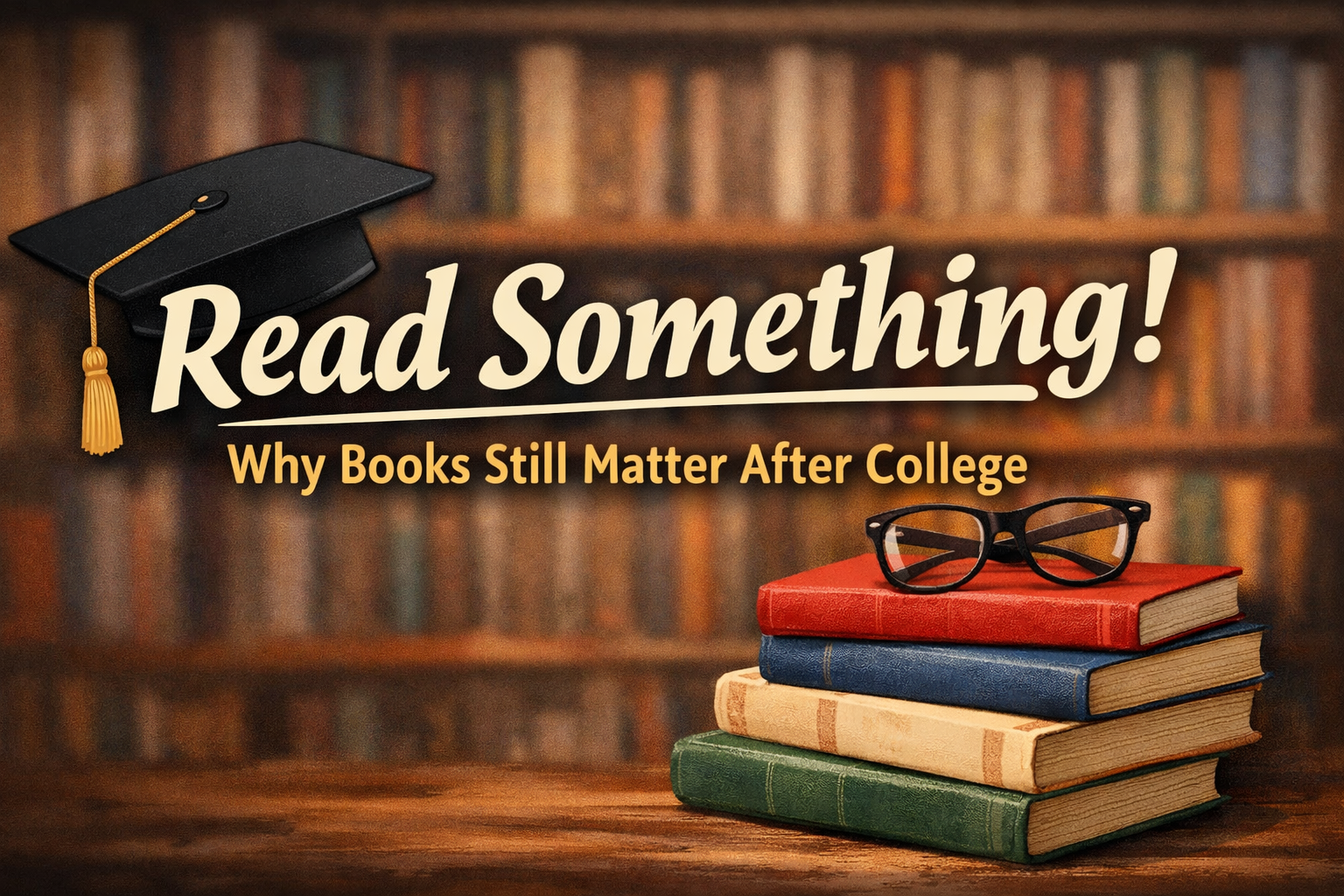
You don’t have to read everything. You don’t have to agree with everything. Just read something.
I say find what suits you, what interest you, and what is going to get you to open up that book for at least a few minutes every day. You don’t need to go all out “Greg”.
In the meantime, keep writing your story (add that to the reading list).
—Will


Leave a Reply